From the bakehouse · 4 November 2026
Notes on levain.
What our starter does all day, and why a loaf takes 30 hours.
By the Little Levain bakers · 4 minute read
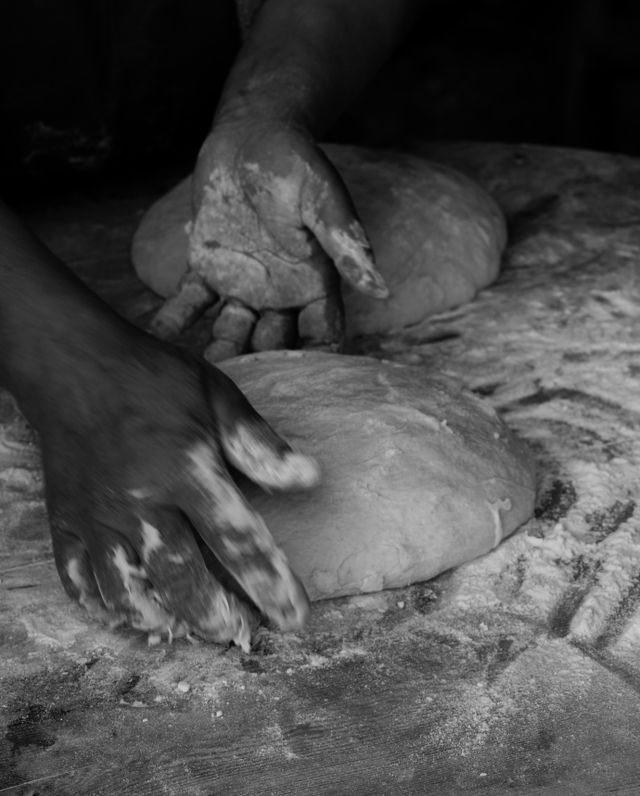
A starter is flour and water, home to wild yeast and lactic-acid bacteria. The yeast helps the dough rise; the bacteria give it acidity and flavour. We’ve kept ours going since the home-kitchen days.
For each bake, we take a little ripe starter and feed it fresh flour and water. This build is the levain. It goes into the final dough when it’s risen, full of bubbles, and smells pleasantly fruity.
The afternoon before
We mix flour and water and leave them to rest. Then we add the levain and salt. Over the next few hours the dough gets a few folds, with time to relax between them.
“The clock helps. The dough has the final say.”
Room temperature, flour and the starter’s activity all affect the timing. A warm summer dough moves faster than one mixed in November, so we check it by feel as well as by the clock.
Shaping & the overnight proof
The façonnage gives the loaf its shape and surface tension. The dough rests in a floured basket overnight in the fridge. This cold proof gives us some flexibility in the morning, and the flavour has more time to develop.
A baker’s pâte fermentée is a different preferment: a saved piece of yeasted dough. The names get used loosely, but we use a sourdough levain here, not yesterday’s salted dough.
The morning bake
The loaves go into the oven at about 250 °C, with steam for the first part of the bake. A country loaf takes roughly 45 minutes. Then it needs to cool before we slice it; the crumb is still setting inside.
Find your next loaf →